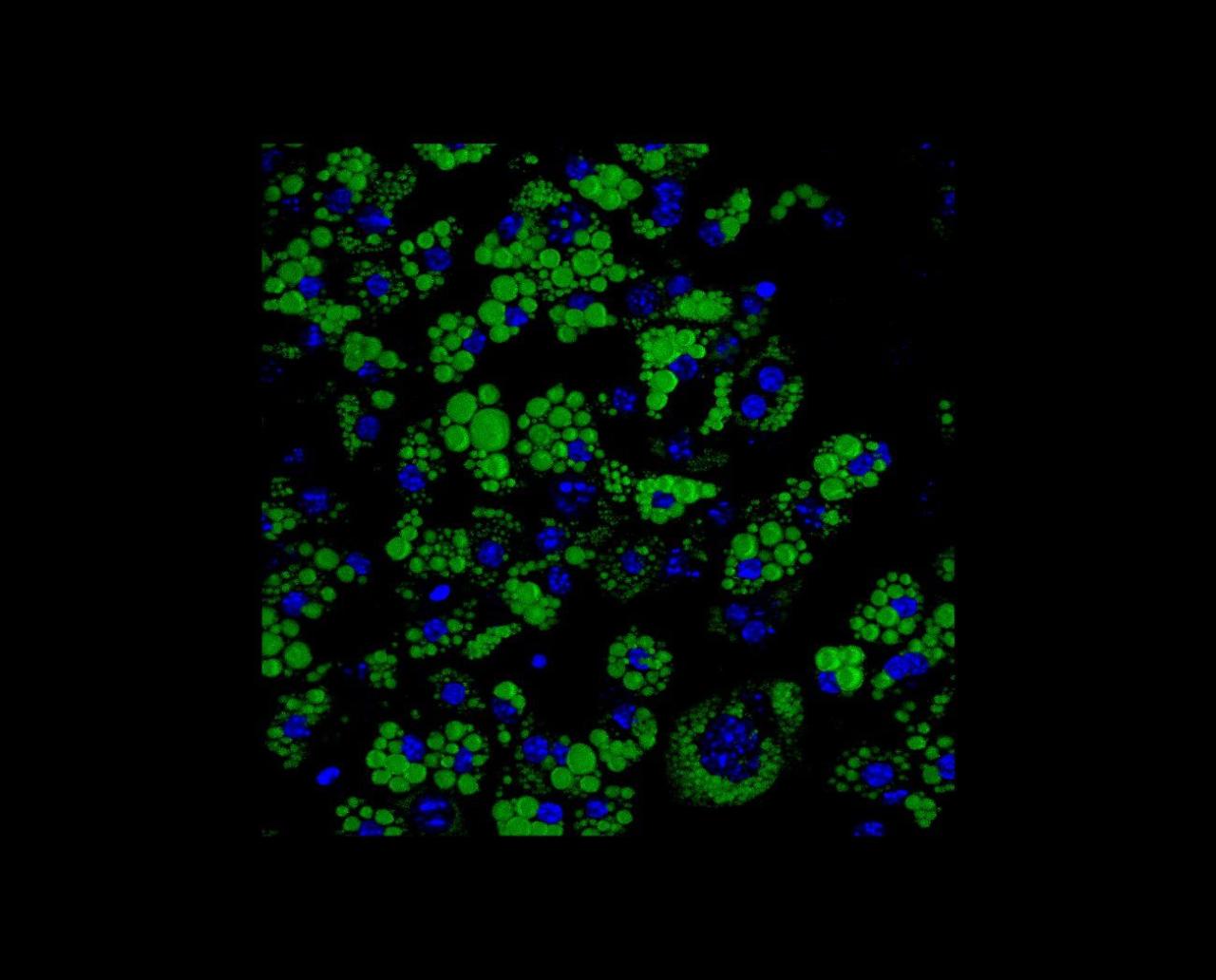
Ongoing projects in the Reilly are investigating the signaling pathways and metabolism regulated by free fatty acids release by lipolysis:
1). What signaling pathways are activated in lipolytic adipocytes?
2). What kinase phosphorylates STAT3 at serine 727?
3). How is GPAT3 activity suppressed by catecholamines?
4). How does lipolysis effect mitochondrial respiration?
Assistant Professor of Metabolic Health in Medicine
The Reilly lab is working to uncover the signaling pathways regulating adipocyte metabolism and the role they play in whole organism energy balance and metabolic health.
When nutrient intake exceeds energy expenditure these excess nutrients are stored in adipocytes as triglycerides. Conversely, when energy demand is high, adipocytes mobilize stored triglycerides via lipolysis, releasing free fatty acids and glycerol to be used in the muscle and other tissues. Interestingly, one to two third of fatty acids released by lipolysis are retained in the adipose tissue. While some of these fatty acids are re-esterified, lipolytic adipocytes dramatically increase their rate of oxidative metabolism burning these fatty acids. The resulting lipolysis driven oxidative metabolism is an energy expending pathway occurring in white adipocytes. The Reilly lab investigates the signaling pathways regulating fatty acid deposition in lipolytic adipocytes. By elucidating the molecular mechanisms regulating lipolysis driven oxidative metabolism we hope to gain insight into adipocyte metabolism. This pathway could have therapeutic implications for diseases resulting from energy imbalance, such as obesity and cachexia.
Figure 1
Biography
Shannon Reilly has dedicated her career to studying metabolic health and disease. During her doctoral studies at the Harvard School of Public Health, Dr. Reilly investigated the transcriptional networks that contribute to obesity related metabolic diseases. As a postdoctoral fellow in Alan Saltiel’s laboratory at the University of Michigan, Dr. Reilly characterized the signaling pathways linking adipose tissue inflammation to metabolic disease. Dr. Reilly is now an Assistant Professor at the Weill Cornell Medicine studying the molecular pathways regulating energy expenditure in adipocytes and their impact on energy balance and metabolic health.
Distinctions:
Junior Faculty Development Award, American Diabetes Association, 2019
Research Scientist Development Award-K01, NIH-NIDDK, 2015
Ruth L. Kirschstein NRSA Individual Postdoctoral Fellowship-F32 NIH-NIDDK, 2012
Edgar Haber Award for Outstanding Doctoral Achievement, Harvard University, 2011
Connecticut Valley Section of the A.C.S. Student Award, University of Massachusetts at Amherst, 2005
Bradspies Research Fellowship Award, University of Massachusetts at Amherst, 2004
ARIAD Scholarship, University of Massachusetts at Amherst, 2005
C.D. Youngren Scholarship Award, University of Massachusetts at Amherst, 2004