Our lab seeks to understand how cells and organisms adapt to metabolic stress, focusing on metabolic diseases like diabetes and cardiovascular diseases, with the ultimate goal of developing novel diagnostic tools and treatments.
Adipose Biology in Cardiometabolic Health and Disease
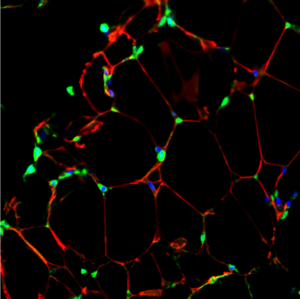
Aside from their well-known role in energy storage, adipocytes secrete many adipocytokines that can modulate systemic energy homeostasis and diseases such as diabetes and obesity. The Lo lab is interested in understanding how the adipose organ strikes this delicate balance between health and disease and harnessing the power of specific adipokines to prevent and treat diseases. They made the discovery that the adipokine adipsin communicates to pancreatic beta cells to prevent beta cell failure in type 2 diabetes. The Lo lab is also investigating how fat cells communicate with the heart to orchestrate systemic metabolic health.
Pancreatic Islet Biology and Dysregulation in Diabetes
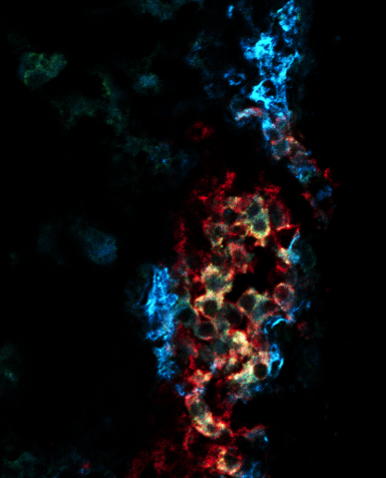
Insulin secreting beta cells are embedded within the pancreatic islets of Langerhans. Insulin is a key hormone that lowers blood glucose levels. In type 2 diabetes (where blood glucose levels are too high), there is dysfunction of the beta cells in insulin secretion. In advanced cases of type 2 diabetes there is more severe dysfunction and loss of beta cells to death and dedifferentiation. There are no current treatments that can arrest or reverse beta cell failure. We discovered that blocking the DUSP26 phosphatase may prevent beta cell death and dedifferentiation. There are also different subtypes of beta cells, including ones that are better insulin secretors. These high performing beta cells are lost in type 2 diabetes. Studies are underway to see how leveraging this knowledge can treat or prevent diabetes.
Figure 1.
Figure 2.
Biography
James Lo, MD, PhD is Associate Professor of Medicine at Weill Cornell Medical College and Associate Attending Physician at New York-Presbyterian Hospital. He is the Rohr Family Clinical Scholar, Director of Translational Cardiovascular Research, and an elected member of the American Society of Clinical Investigation. Dr. Lo earned his Bachelor’s degree in biochemistry, MD, and PhD at the University of Chicago. In his graduate work, he worked on cytokine regulation of peripheral immune responses and control of lipid metabolism. He subsequently completed internal medicine residency training at Massachusetts General Hospital and cardiovascular medicine fellowship at Brigham and Women’s Hospital and Harvard Medical School.
Distinctions:
ASCI, elected member
Gilead Research Scholar
Rohr Family Clinical Scholar
Associate Director, Tri-I MD/PhD program
Selected Publications:
Gómez-Banoy, N., Guseh, J. S., Li, G., Rubio-Navarro, A., Chen, T., Poirier, B., Putzel, G., Rosselot, C., Pabón, M. A., Camporez, J. P., Bhambhani, V., Hwang, S. J., Yao, C., Perry, R. J., Mukherjee, S., Larson, M. G., Levy, D., Dow, L. E., Shulman, G. I., Dephoure, N., … Lo, J. C. (2019). Adipsin preserves beta cells in diabetic mice and associates with protection from type 2 diabetes in humans.Nature medicine, 25(11), 1739–1747.